
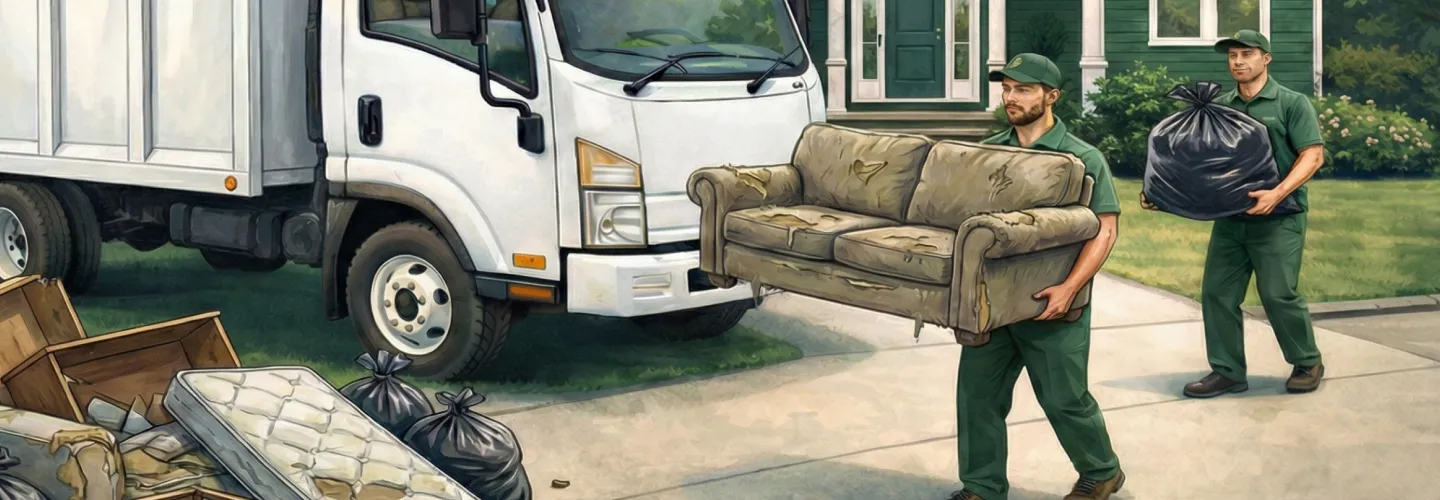
Acworth Appliance Removal Services
Choose us for hassle-free appliance removal—our experienced team ensures safe, eco-friendly disposal and same-day service, making it easy to reclaim your space without lifting a finger.
Get a Free QuoteOur Acworth Junk Removal Services
Appliance Removal in Acworth, GA – Local Service Guide
Appliance removal in Acworth, GA is a common need for homeowners and businesses, especially during seasonal upgrades, property renovations, or after major life events. In neighborhoods like Brookstone and Lake Park, residents often schedule appliance removal when replacing old refrigerators, washers, or stoves—typically during spring cleanouts or after moving. Local disposal options include donation, recycling, or responsible disposal, with logistics shaped by driveway access, weather, and the size of the item. For commercial properties near Cobb Parkway or downtown Acworth, restaurants and offices may require discreet, timely removal to minimize disruption, often handling larger volumes or coordinating with property managers. Specialty scenarios, such as estate cleanouts or construction debris removal, demand careful planning and coordination, especially in older homes or during foreclosure situations. For all categories, understanding local rules and schedules is essential—refer to Acworth Public Works Department for official guidelines and resources.
Key Considerations for Appliance Removal in Acworth
- Timing removals around seasonal cleanouts or property sales
- Checking for required permits or local disposal rules
- Choosing proper disposal channels: donate, recycle, or landfill
- Ensuring easy access for removal teams (driveways, stairs, weather)
- Estimating volume and coordinating for large or specialty items
- Addressing category-specific needs (commercial, estate, or construction)
Benefits of Appliance Removal in Acworth
Fast and Reliable Service
Eco-Friendly Disposal
Licensed and Insured Team
Upfront Transparent Pricing
Convenient Scheduling Options
Safe Appliance Handling
Coordinating Appliance Removal with Acworth's Public Works and Sanitation Services
Residents seeking to dispose of large household appliances in Acworth must coordinate with the city's municipal sanitation services. The Acworth Public Works Department oversees solid waste collection, including bulk item pickup for oversized appliances such as refrigerators, washing machines, dryers, dishwashers, and water heaters. Residents should contact Public Works in advance to schedule appliance pickup, as these items are not collected during standard curbside trash service. Key preparation steps include:
- Disconnect all utilities (gas, electric, water) before moving appliances to the curb
- Remove doors from refrigerators and freezers to prevent child entrapment hazards
- Drain all water from washing machines, dishwashers, and water heaters prior to placement
- Place appliances curbside on the scheduled collection day, not on sidewalks or in roadways
- Do not place appliances near storm drains, fire hydrants, or utility access points
Improper curbside placement may result in code enforcement action. Contact Public Works to confirm scheduling requirements and any applicable fees.
Acworth Public Works Department
4415 Senator Russell Avenue, Acworth, GA 30101
Phone: (770) 974-3112
Official Website: Acworth Public Works Department
EPA Refrigerant Recovery Requirements for Appliance Disposal in Acworth
Federal law strictly regulates the disposal of appliances containing refrigerants, including refrigerators, freezers, air conditioning units, and dehumidifiers. Under EPA Section 608 regulations, refrigerants such as R-12, R-22, and R-134a must be recovered by a certified technician before any appliance is scrapped, recycled, or sent to a landfill. Venting refrigerants into the atmosphere is a federal violation carrying fines of up to $44,539 per day per violation. Acworth residents and haulers must ensure compliance with the following:
- Certified technician requirement — Only EPA Section 608-certified technicians may recover refrigerants from sealed systems
- Documentation — Proof of proper refrigerant recovery must accompany appliances delivered to scrap yards or recycling facilities
- Prohibited venting — Intentional release of CFC, HCFC, or HFC refrigerants violates the Clean Air Act
- Compressor oils — Used compressor oils may contain hazardous constituents and require proper handling under Resource Conservation and Recovery Act (RCRA) guidelines
Residents should never attempt to cut refrigerant lines or disassemble sealed cooling systems. Improper handling poses environmental contamination risks and potential health hazards from chemical exposure.
Georgia's Solid Waste Management Act and Appliance Disposal Compliance
Georgia state law governs the proper disposal of large appliances through the Georgia Environmental Protection Division (GA EPD), which administers the Georgia Comprehensive Solid Waste Management Act (O.C.G.A. § 12-8-20 et seq.). This legislation establishes standards for solid waste handling, transportation, and disposal across all municipalities, including Acworth. Key state-level requirements affecting appliance removal include:
- Landfill restrictions — Appliances containing refrigerants may not be accepted at permitted landfills without documented proof of refrigerant recovery
- Scrap tire provisions — Appliances with rubber components must comply with tire disposal regulations where applicable
- Illegal dumping penalties — Disposing of appliances on roadsides, vacant lots, or waterways carries fines up to $25,000 and potential imprisonment under Georgia law
- Transporter requirements — Commercial haulers transporting solid waste, including appliances, must comply with GA EPD permitting and manifest requirements
- Mercury-containing components — Thermostats and switches in older appliances may contain mercury, classified as hazardous waste requiring special handling
Acworth's Code Compliance division enforces local property maintenance standards that prohibit the outdoor storage of abandoned or inoperable appliances on residential and commercial properties.
Acworth Property Maintenance Standards and Appliance Storage Enforcement
The City of Acworth enforces property maintenance codes that directly affect how residents store, stage, and dispose of unwanted appliances. Abandoned appliances left on porches, in yards, or along driveways may constitute code violations subject to enforcement action. The Acworth Code Compliance division investigates complaints and conducts inspections to ensure properties meet municipal standards. Residents planning appliance removal should be aware of the following:
- No outdoor storage of inoperable appliances on residential properties; violations may result in notice of violation and mandatory abatement
- Child safety hazard — Abandoned refrigerators and freezers with attached doors pose entrapment risks and may trigger immediate enforcement under Georgia law (O.C.G.A. § 16-11-100)
- Renovation debris — Appliance removal during kitchen or laundry remodels may require coordination with the Acworth Building Department if structural modifications are involved
- Stormwater protection — Appliances staged outdoors must not leak fluids into stormwater systems; the Acworth Stormwater Division monitors discharge compliance
Residents who receive a code violation notice typically have a defined compliance window to remove the appliance before escalated penalties apply.
Acworth Code Compliance
4415 Senator Russell Avenue, Acworth, GA 30101
Phone: (770) 974-3112
Official Website: Acworth Code Compliance
Appliance Recycling and Scrap Metal Recovery Options for Acworth Residents
Recycling household appliances diverts significant material from landfills and recovers valuable metals including steel, copper, aluminum, and brass. Acworth residents are encouraged to explore recycling and donation options before scheduling appliance disposal. Cobb County, which encompasses much of the Acworth service area, provides resources for responsible appliance recycling. Key considerations for appliance recycling include:
- Scrap metal recovery — Washing machines, dryers, stoves, and water heaters contain high volumes of recyclable steel and are commonly accepted at licensed scrap metal facilities
- Refrigerant-containing units — Refrigerators, freezers, and air conditioners require certified refrigerant recovery before metal recycling; scrap yards will not accept units with intact sealed systems
- Donation eligibility — Functional appliances in good working condition may be donated to local charitable organizations such as Habitat for Humanity ReStore, which accepts working refrigerators, stoves, washers, and dryers
- Hazardous components — Older appliances may contain PCB-laden capacitors, mercury switches, or lead solder requiring separation before recycling
- Appliance buy-back programs — Some utility providers offer rebates or free pickup when residents upgrade to energy-efficient models; check with Acworth Power for current program availability
Proper recycling ensures compliance with Georgia solid waste regulations while supporting material recovery and landfill diversion goals established by the Georgia Environmental Protection Division.
What Neighborhoods Do We Serve Throughout Acworth, GA?
- Downtown Acworth — The historic downtown district features older homes and commercial buildings with narrow lot configurations. Appliance removal from these properties may require navigating tight driveways and limited staging areas near Main Street and adjacent residential blocks.
- Brookstone — This established subdivision features single-family homes with standard driveway access. HOA guidelines may govern curbside staging of appliances; residents should verify community covenants before placing units outside for pickup.
- Mars Hill — Properties in the Mars Hill area include a mix of older ranch-style homes and newer construction. Appliances in pre-1980 homes may contain mercury thermostats or other hazardous components requiring special handling during removal.
- Cowan Road Corridor — This area includes both residential neighborhoods and commercial properties along a busy thoroughfare. Truck access for appliance pickup requires coordination with traffic flow, and commercial properties may need to schedule removal during off-peak hours.
- Lake Acworth Area — Lakefront and near-lake properties often feature sloped driveways and limited turnaround space. Heavy appliances such as water heaters and HVAC units may require additional equipment for safe removal from basement or crawlspace installations.
- Cedarcrest and Baker Grove — These family-oriented subdivisions have wide residential streets accommodating standard removal vehicles. Seasonal turnover and home renovation projects generate periodic demand for washer, dryer, and kitchen appliance disposal.