
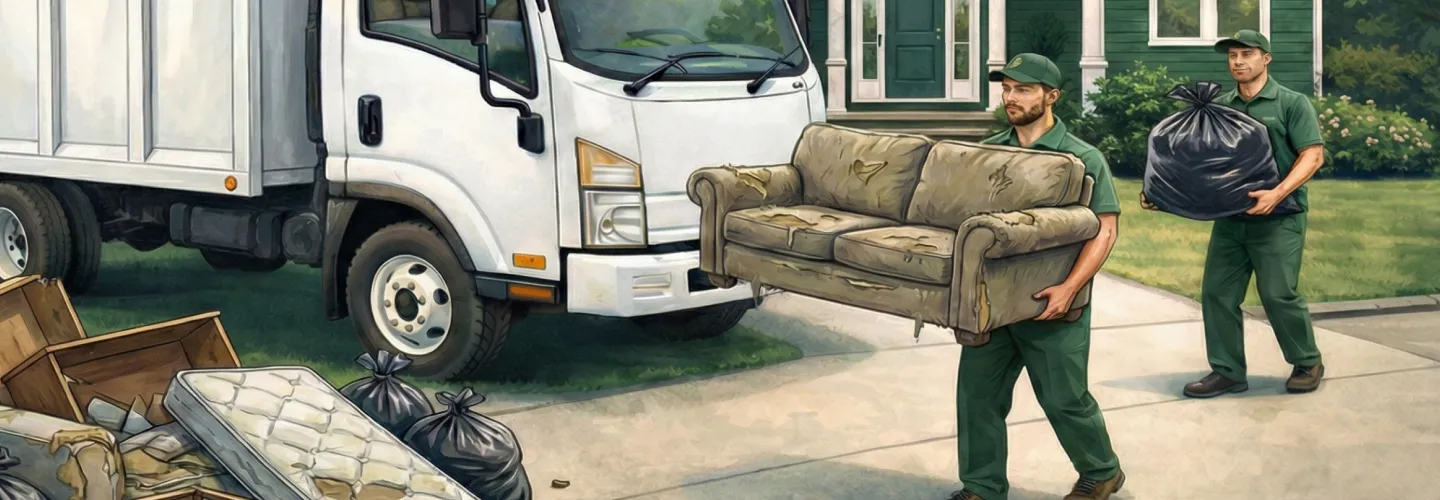
Acworth Estate Cleanout Services
Choose our estate cleanout services for respectful handling, thorough attention to detail, and a seamless process that gives you peace of mind during life's transitions.
Get a Free QuoteOur Acworth Junk Removal Services
Estate Cleanout in Acworth, GA – Local Service Guide
Estate cleanout in Acworth, GA, requires a thoughtful approach tailored to local needs. For residential items like furniture, appliances, and hot tubs, cleanouts often follow major life events, seasonal upgrades, or property sales. Neighborhoods such as Brookstone and Governors Towne Club frequently see cleanouts during spring and fall, when weather is ideal for moving bulky items. Options include donation, recycling, or disposal, with logistics shaped by driveway access and weather conditions. For residential spaces—garages, basements, attics, and yard waste—seasonal storms and yard cycles drive demand, especially in areas with heavy tree coverage or flood-prone lots. Regular trash pickup schedules and city yard waste programs help manage frequency. Commercial cleanouts in Acworth’s business corridors, like Main Street and Lake Acworth Village, address office moves, retail renovations, and hospitality turnovers, requiring discreet, timely service and handling larger volumes. Specialty services—dumpster rentals, foreclosure, hoarding, and construction debris—are often needed for urgent or complex projects, demanding careful planning and coordination with property managers and city guidelines. For more on local disposal rules and resources, visit the Acworth Public Works Department.
Key Considerations for Estate Cleanout in Acworth
- Timing around seasonal weather and local events
- Permit requirements for large-scale disposals
- Approved disposal and recycling channels
- Property access and parking logistics
- Volume estimation and category-specific handling
- Coordination with city services and neighborhood schedules
Benefits of Estate Cleanout in Acworth
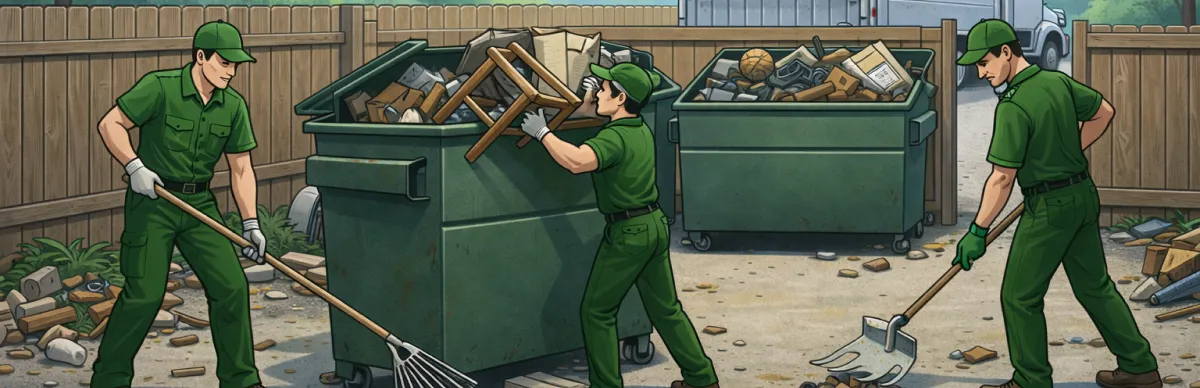
Fast and Efficient Cleanouts
Experienced Professional Team
Eco-Friendly Disposal Solutions
Flexible Scheduling Options
Transparent Upfront Pricing
Comprehensive Estate Services
Coordinating Estate Cleanout Disposal with Acworth's Public Works Department
Estate cleanout projects in Acworth generate substantial volumes of mixed materials requiring proper municipal coordination. The Acworth Public Works Department oversees sanitation services and can provide guidance on bulk item collection scheduling and acceptable curbside placement for residential properties. Before beginning any estate cleanout, residents should confirm the following with Public Works:
- Bulk item scheduling — contact the department to arrange pickup for oversized furniture, appliances, and household goods that exceed standard curbside collection limits
- Curbside placement rules — items must be separated from regular household waste and placed in accessible locations without blocking sidewalks or rights-of-way
- Prohibited curbside items — hazardous materials, electronics, tires, and appliances containing refrigerants cannot be placed at the curb for standard collection
- Volume limitations — large-scale estate cleanouts may exceed residential pickup allowances, requiring coordination with licensed commercial haulers
Acworth Public Works Department
4415 Senator Russell Avenue, Acworth, GA 30101
Phone: (770) 974-3112
Official Website: Acworth Public Works Department
Residents should also verify whether their property falls within Acworth's city limits or unincorporated Cobb County, as waste collection services and regulations differ between jurisdictions.
Hazardous Materials and Prohibited Items in Acworth Estate Cleanouts
Older Acworth homes, particularly those built before 1978, may contain hazardous materials that require specialized handling during estate cleanouts. The EPA Renovation, Repair, and Painting Rule mandates lead-safe work practices when disturbing painted surfaces in pre-1978 structures. Georgia law also requires proper identification and disposal of asbestos-containing materials through licensed abatement contractors. Common hazardous items encountered during estate cleanouts include:
- Paints, solvents, and pesticides — classified as household hazardous waste; prohibited from landfill disposal under Georgia solid waste regulations
- Propane tanks and gas canisters — must be emptied and recycled through authorized facilities; never placed in curbside collection
- Medications and medical supplies — require disposal through pharmacy take-back programs or DEA-authorized collection events
- Batteries (lead-acid and lithium) — lead-acid batteries must be recycled at retail locations; lithium batteries pose fire risks in waste streams
- Freon-containing appliances — refrigerant recovery by an EPA Section 608-certified technician is required before disposal
Cobb County periodically hosts Household Hazardous Waste collection events for residents in the Acworth area. Contact the Georgia Environmental Protection Division for additional guidance on proper hazardous waste disposal channels and licensed transporter requirements.
Georgia Solid Waste Management Act Compliance for Estate Cleanout Projects
All estate cleanout activities in Acworth must comply with the Georgia Comprehensive Solid Waste Management Act (O.C.G.A. § 12-8-20) administered by the Georgia Environmental Protection Division (GA EPD). This legislation establishes the regulatory framework for solid waste handling, transportation, and disposal throughout the state. Key compliance requirements for estate cleanout projects include:
- Transporter permits — commercial haulers removing estate cleanout materials must hold valid solid waste handling permits issued by GA EPD
- Disposal facility requirements — all waste must be delivered to permitted solid waste facilities; illegal dumping carries penalties of up to $25,000 per day per violation under Georgia law
- Tire disposal — tires must be managed separately and delivered to permitted tire processors; accumulation of more than 100 tires requires a scrap tire carrier permit
- Construction and demolition debris — if the estate cleanout involves structural demolition or renovation, C&D materials must be separated and delivered to permitted inert waste landfills or C&D recycling facilities
Georgia Environmental Protection Division
2 Martin Luther King Jr. Drive SE, Suite 1456 East, Atlanta, GA 30334
Phone: (404) 656-4713
Official Website: Georgia Environmental Protection Division
Property owners bear ultimate responsibility for ensuring all materials removed during an estate cleanout reach properly permitted disposal or recycling facilities.
Acworth Code Compliance and Property Maintenance During Estate Cleanouts
Estate cleanout projects must adhere to Acworth's municipal code enforcement standards to avoid violations during the cleanup process. The Acworth Code Compliance division enforces property maintenance ordinances that directly affect how estate cleanout work is conducted. Residents and contractors should be aware of the following requirements:
- Debris accumulation — materials staged for removal must not remain on the property or curbside for extended periods; prolonged accumulation may trigger code violations
- Noise ordinances — estate cleanout work involving heavy lifting, equipment operation, or truck loading should be conducted during permitted hours, typically between 7:00 AM and 9:00 PM on weekdays
- Right-of-way clearance — removal vehicles must not obstruct public sidewalks, fire hydrants, or neighboring driveways during loading operations
- Building permits — if the estate cleanout involves any structural modification, demolition, or renovation, permits must be obtained through the Acworth Building Department prior to commencing work
Acworth Code Compliance
4415 Senator Russell Avenue, Acworth, GA 30101
Phone: (770) 974-3112
Official Website: Acworth Code Compliance
Properties located within Acworth's historic downtown district may face additional review requirements. Contact the Acworth Planning & Zoning division to determine whether exterior modifications or visible staging areas require approval.
Recycling, Donation, and Material Recovery Options for Acworth Estate Cleanouts
Diverting reusable items from landfills is both environmentally responsible and often required for specific material categories during estate cleanouts. Acworth residents have access to several recycling and donation channels throughout the greater Cobb County area. Prioritizing material recovery during an estate cleanout involves the following considerations:
- Furniture and household goods — organizations such as Habitat for Humanity ReStore and local charitable thrift stores accept gently used furniture, kitchenware, and home décor items; schedule donation pickups in advance for large volumes
- Electronics and e-waste — computers, televisions, and peripherals should be recycled through certified e-waste processors; Georgia does not currently have a statewide e-waste landfill ban, but responsible recycling is strongly encouraged
- Scrap metal — appliances, metal fixtures, and structural metals have resale value at licensed scrap yards and should be separated from general waste
- Appliances with refrigerants — refrigerators, freezers, and air conditioning units require certified refrigerant recovery before recycling or disposal
- Textiles and clothing — donate usable items to local charities or textile recycling drop-off bins available throughout the Acworth area
The Acworth Stormwater Division also advises that estate cleanout debris must be managed to prevent materials from entering storm drains or waterways, particularly during rainy conditions. Proper tarping of loaded vehicles and containment of loose materials are essential pollution prevention measures.
What Neighborhoods Do We Serve Throughout Acworth, GA?
- Downtown Acworth — The historic Main Street corridor features older commercial and residential structures, some dating to the early 1900s. Narrow lot configurations and on-street parking may require advance coordination for removal vehicle staging, and pre-1978 buildings should be assessed for lead paint and asbestos before cleanout work begins.
- Acworth Lake District — Lakefront properties near Lake Acworth and Lake Allatoona often include larger estates with multiple outbuildings, boat storage areas, and seasonal furnishings. Access roads near the waterfront may have weight restrictions, and stormwater protection measures are critical given proximity to water resources.
- Mars Hill — This established residential area features a mix of mid-century and newer single-family homes. Wide residential streets generally accommodate removal vehicles, though cul-de-sac turnaround space should be confirmed for larger trucks.
- Baker Grove and Brookstone — These planned subdivisions include HOA-governed communities where advance notification and approval may be required before staging estate cleanout materials curbside or parking commercial vehicles within the neighborhood.
- Cowan Road Corridor — A mix of older ranch-style homes and rural residential properties along this corridor may present longer driveway access and unpaved surfaces. Properties in this area frequently include workshops, barns, and storage buildings that add complexity to estate cleanout scope.
- Cedarcrest and Bentwater — Newer residential developments with wider streets and standard driveway access. HOA covenants typically restrict visible debris staging and may limit the hours during which commercial removal vehicles can operate within the community.